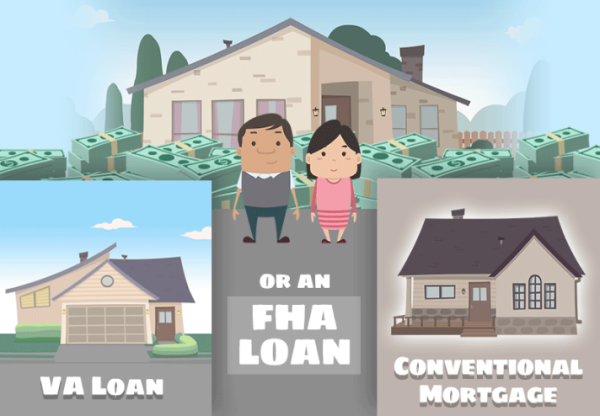
What are the main differences between FHA home loans and non-FHA mortgages? For a start, FHA loans have lower credit score and down payment requirements than conventional loans, but conventional financing offers more flexibility with issues like appraisals and mortgage insurance.

Other government-backed home loan programs like VA loans have similar FICO score requirements, but once you get into your conventional loan options, things become quite different.

Credit Scores and FHA Loan Down Payments

FHA guidelines allow a 3.5% down payment for a single-family home, provided the borrower has a credit score of 580 or higher. Borrowers with credit scores between 500 and 579 can still technically be approved for an FHA loan, but they must provide a 10% down payment.
 
Another government-backed loan option, the VA mortgage, offers a zero-down payment home loan program, but these are not open to the general public.

Conventional loans demand higher FICO scores. In many cases, the baseline credit score for a standard conventional single-family home loan is 620, but to qualify for the best conventional interest rates and affordable monthly payments, a credit score of 780 or above is required.

Debt-to-Income Ratios

Lenders evaluate monthly debts and gross monthly income to approve or deny the loan application. The maximum acceptable debt-to-income ratio for standard FHA loans is 43%, but FHA automated underwriting systems can approve ratios up to 50% for borrowers with strong credit scores or substantial cash reserves.

Conventional guidelines typically allow a maximum debt-to-income ratio of 45% and may stretch to 50% under the right conditions. Approval in such cases depends on credit scores, credit history, and having financial reserves.

Mortgage Insurance

Mortgage insurance is permanent for many FHA buyers for the lifetime of their mortgage unless they put 10% down. With 10% or more down, the FHA mortgage insurance requirement is 11 years.

Conventional buyers can typically eliminate mortgage insurance once they reach 20% equity.
FHA loans require mortgage insurance regardless of the down payment size. Buyers pay an upfront mortgage insurance premium equal to 1.75% of the base loan amount at closing, which is usually rolled into the total loan balance.

FHA borrowers also pay an annual mortgage insurance premium ranging from 0.15% to 0.75%, split across 12 monthly payments. If a buyer puts down less than 10% on an FHA loan, this monthly premium remains for the entire life of the mortgage. The VA home loan program has no mortgage insurance requirement, but lender standards may apply.

Bottom Line

FHA loans can make homeownership more accessible by offering lower credit score and down payment requirements, while conventional loans often provide greater flexibility and lower long-term costs for qualified borrowers.

Understanding the differences in credit standards, mortgage insurance, and qualification requirements can help buyers choose the financing option that best fits their financial goals.